Fraud prevention
Don't let yourself be deceived!
How not to become a victim of scammers: some obvious but important tips
Scammers are persuasive and inventive, so it’s a good idea to remember the basic rules for dealing with them. Here are a few safety rules that will help you avoid being caught by fraudsters.
This is rule №1 in the fight against scammers. Of course, you have heard of it. However, we would like to remind you once again that bank employees never ask for this information, but fraudsters will be very happy to have it. Having received the code, they can enter your online bank to withdraw money, or they can use your card to pay for a purchase on some websites. Both options are, to put it mildly, unpleasant, so be vigilant.
If the person calling you appears to be an employee of Ucell and under any pretext asks you to give him/her the code from SMS or your personal information - stop the conversation immediately.
Be careful with your bank card details
Try not to “reveal” your bank card details, especially when it comes to paying on an unfamiliar resource. But most importantly, never tell anyone the CVC-code or expiry date of your bank card. CVC-code is three digits on the back of your bank card, which serve as a PIN-code for online transactions. If someone asks you for this code, it is a reason to be wary. This information is not required for normal card transfers, but once in possession of it, fraudsters can easily steal your money.
There is no such thing as a “safe” account
Quite often fraudsters play on people’s fear of losing their money. If a person starts to panic and act on emotions, it is not difficult for the scammers to fool him or her.
Here is one of the most popular scam schemes: you receive a call from a ‘security officer’ from your bank or even law enforcement. He informs you that someone is trying to steal money from your accounts and offers a ‘rescue’ plan: to withdraw your money to a ‘safe’ account. Well, there is no such thing as a ‘safe account,’ it’s just another ploy by criminals to swindle you out of your money. If you are still worried about your accounts, we recommend you to contact the bank’s support service or check the status of your accounts in the banking application.
Do not trust strangers, be critical of all information provided by them and check it yourself. If it is about account transactions, contact the bank yourself. Someone informs you that your relative is in trouble and needs money - call your relative and find out if he or she is OK. Most likely, he or she is not even aware of any ‘problems’.
Do not believe the promises of easy money
A letter informs you that you have won a lot of money in a lottery you did not even participate in? A namesake from Uganda wants to give you a house and you need to send a few dollars to his lawyer to seal the deal? Or your great-uncle left you a large sum of money to, of whom you have not even heard, and you need to pay a ‘fee’ to enter the inheritance? We recommend that you immediately delete such emails and block the senders.
And only fraudsters promise “earnings on the Internet without investments”, investment under 500% annual and other gold mountains for a couple of clicks of a mouse. Such loud words usually mean only one thing: that you are being deceived. The outcome of such stories is usually one: after the victim transfers money, all these “investors” and lawyers from Uganda immediately disappear.
Remember: transferring money to strangers on the Internet is almost always a bad idea. And even if your favourite blogger has written in a private message with an offer to increase your earnings, be critical of such messages and do not rush to agree - after all, scammers often pretend to be famous people.
Do not rush to click on links from messages and install files from
suspicious sources
This does not just apply to messages from strangers: even with people you know, be careful. The account of anyone you know can be hacked to send malicious links to all of your contacts that carry a virus or give access to your personal data. Cybercriminals are actively taking advantage of this.
And also look carefully at the link address: as a rule, scammers simply rearrange letters or add extra characters to make it appear that the link leads to an address you know. For example, OLLX or sales_avia. If you have noticed something strange or see that the sender’s email looks like a hodgepodge of characters and letters, do not reply to the email or click on the links. Send it straight to Spam.
You receive strange messages in messenger or SMS that, for example, you have a debt to the Enforcement Bureau (MIB). To see the details, you need to download an apk file to your phone and activate it.
What kind of scam is there here? When you run this apk file, you will install malware on your phone. It will steal your data, intercept SMS, and the scammers will remotely access your banking apps. And with all the data, they easily withdraw all your money from your bank accounts.
How to stay safe. Do not install files from suspicious sources. If you received a file n SMS - delete the message immediately. If you accidentally downloaded and installed a file, immediately reset your phone to factory settings - the malware will be deleted.
To be safe, use anti-virus software on your phone - it will block malicious apps and protect your data.
If you have doubts, find out if you have debts to the bank or the state. There is a service “Check debts under an enforcement document” on the portal of the State services(https://my.gov.uz/ru) in the “Citizenship” section. If there is a debt, you will immediately see the amount and to whom you owe. If not, you have been deceived.
What you need to remember to avoid becoming a victim of scammers
❌Do not allow yourself to be photographed or give your details to strangers, even if they look convincing, show ID or offer money.
❌Do not download or install suspicious files on your phone. Install an anti-virus software in your smartphone and make sure it always works.
❌Do not panic if a relative calls you with a problem from someone else’s number. Ask clarifying questions, or, better, disconnect the call and call him/her back to his/her personal phone number.
❌Never and never give out SMS - codes, passwords and other details to anyone who calls you.
The need to check your phone for viruses
In today’s world, mobile phones have become an integral part of our lives. We use them for communication, work, banking, online shopping and much more. However, with the increase in the amount of data we store on our devices, there is also a greater risk of viruses and other malicious programs. Checking your phone for viruses is an important aspect of digital security.
Why is it important to check your phone for viruses?
Personal data protection: Viruses can steal personal data such as logins, passwords, bank details and other confidential information. This can lead to financial loss and private information leakage.
Advice on how to check your phone for viruses.
Checking your phone regularly for viruses and following these tips will help you protect your data and keep your device running smoothly. Remember that digital security is as much about prevention as it is about protection.
Download the Ucell mobile app
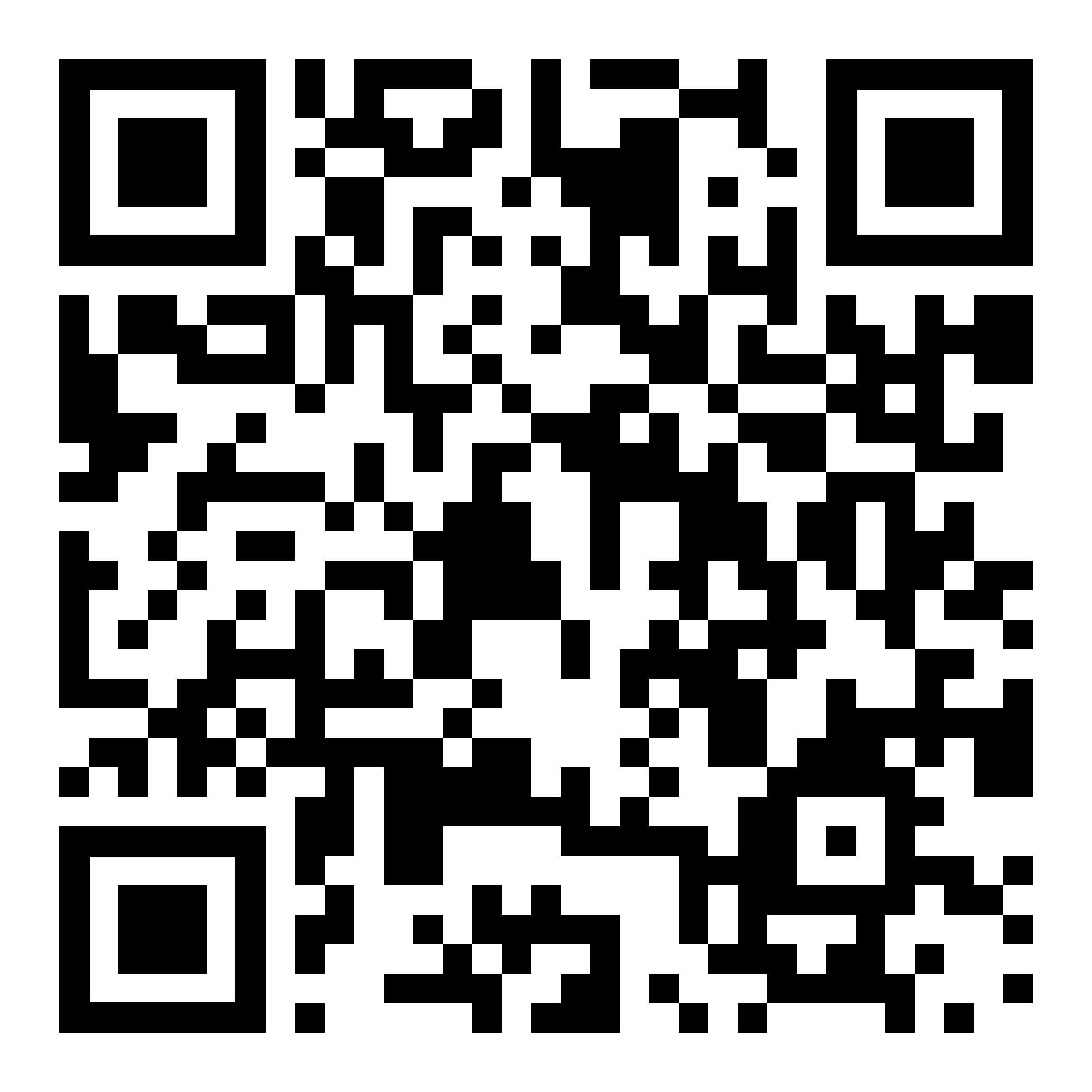 Point your camera



© 2026 ООО «COSCOM» · All rights reserved. Services are licensed.


